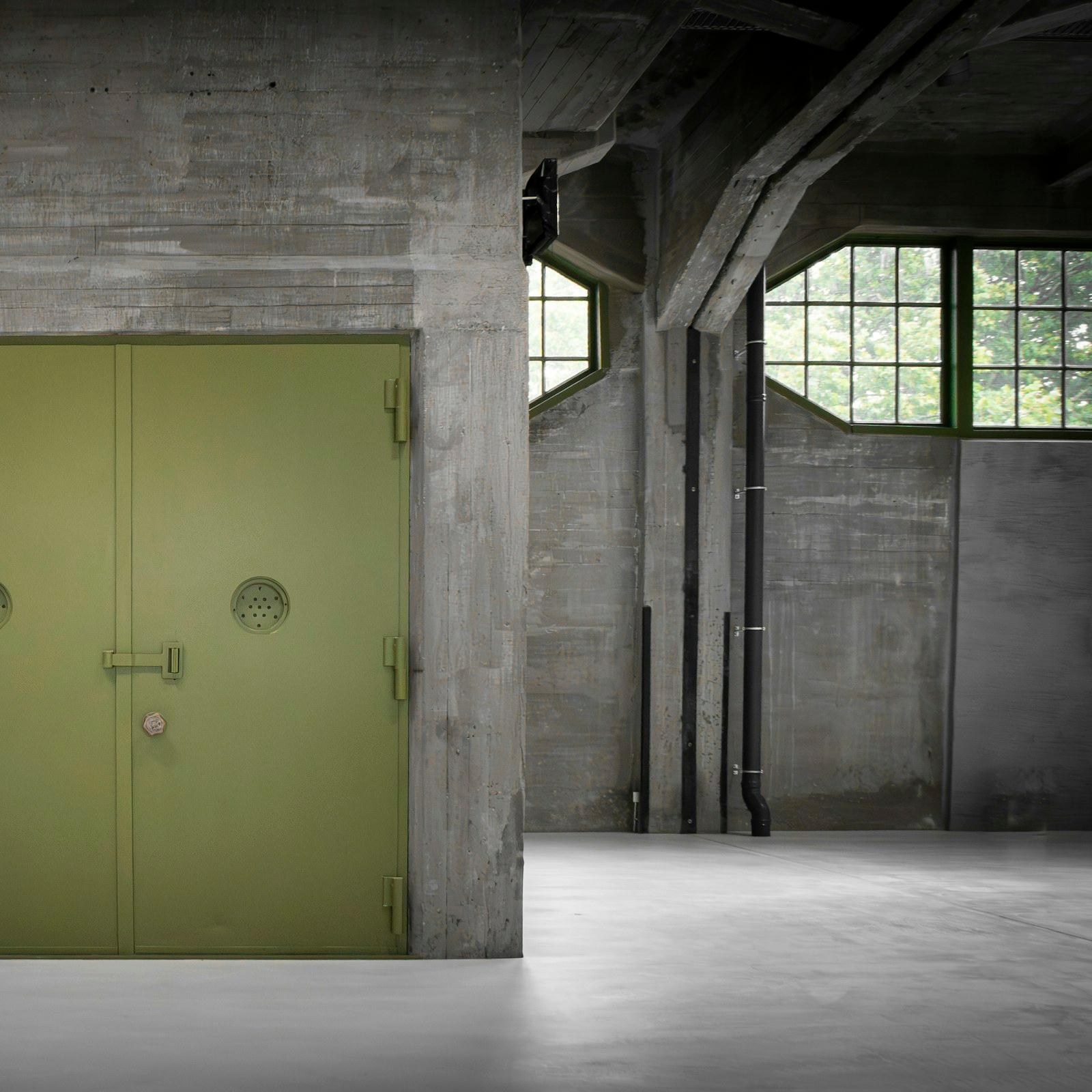
To specify a security door properly, name a resistance class to EN 1627, ask for test evidence that covers the complete assembly, and describe the wall the door will be fixed into. "Heavy-duty steel door" is not a specification. Security doors are classified by how long they resist a defined attacker with a defined set of tools, and that is the language a specification should use.
What EN 1627 resistance classes mean for security doors
EN 1627 is the European standard for burglar resistance of doors, windows, curtain walling, grilles and shutters. It sorts products into six resistance classes, RC1 to RC6. Each class assumes a type of attacker, a tool set and a working time. A higher class means a more experienced attacker, heavier tools and a longer resistance time.
The resistance time is part of the classification. A security door does not stop a determined attacker forever. It buys time for an alarm to sound, for guards to respond, or for the attacker to give up. The right class therefore depends on two things: what sits behind the door, and how quickly help arrives.
| Class | Assumed attacker | Typical tools | Where it is often considered |
|---|---|---|---|
| RC1 | Opportunist using bodily force | Kicking, pushing, shoulder barging, lifting; little resistance to levering tools | Low-risk internal doors |
| RC2 | Occasional burglar | Simple tools such as screwdrivers, pliers and wedges | Apartment entrances, offices, general back-of-house |
| RC3 | Occasional burglar, better equipped | As RC2, plus a crowbar and a second screwdriver | Shops, pharmacies, records rooms, server rooms |
| RC4 | Experienced burglar | Adds saws, hammer, axe, chisel and a cordless drill | Cash rooms, sensitive government areas |
| RC5 | Experienced burglar with power tools | Adds power tools such as a drill, saw and angle grinder | High-value stores, critical infrastructure |
| RC6 | Experienced burglar with high-power tools | Adds high-power tools | Very high-risk openings |
The last column is a starting point, not a rule. The class should come from a risk assessment or the client's security brief.
How security doors are tested: EN 1628, EN 1629 and EN 1630
A door earns its class only by passing tests on a complete, installed sample. Three test methods are used:
- EN 1628, static load. Loads are applied at defined points such as the corners of the leaf, the lock positions and the hinge side, to check that the leaf cannot be pushed out of the frame.
- EN 1629, dynamic load. An impactor strikes the leaf to simulate kicking and body weight.
- EN 1630, manual attack. A trained tester attacks the door with the tool set for the class, within a limited working time. The door fails if an opening large enough to pass through is created.
The test sample includes the leaf, frame, locks, hinges, cylinders, glazing and fixings, so the classification covers that configuration only. If you change the lock, the cylinder, the glazing or the frame fixing, the test evidence may no longer apply. Check the classification report or certificate against the door you are buying, including size and leaf configuration.
The whole opening matters as much as the leaf
Attackers go for the weakest point, which is rarely the face of the leaf. It is usually one of these:
- The wall. A tested door fixed into a weak partition simply moves the attack to the wall. EN 1627 sets requirements for the surrounding wall for each class, covering its material and thickness. Check that your wall construction meets them, or upgrade the wall around the opening.
- Frame anchoring. The frame must be fixed into the structure at close centres with the fixings used in the test. Otherwise a crowbar can spring the frame and release the bolts.
- Hinge-side protection. Hinges can be cut or knocked off. Hinge-side dog bolts keep the leaf in the frame even when the hinges are gone.
- Multi-point locking. Bolts throwing into the frame at several points along the lock edge, and often at head and sill, spread the load so the leaf cannot be levered at one spot.
- Cylinder protection. The cylinder is a common target for drilling, pulling and snapping. Specify a security cylinder protected by a cylinder guard or security escutcheon, matched to the class tested.
- Glazing. Any vision panel must be burglar-resistant glass of the grade used in the tested door, usually classified to EN 356.
Ballistic and blast resistance are separate requirements
EN 1627 covers forced entry with tools only, not bullets or explosions.
Bullet resistance for doors is classified under EN 1522, with the test method in EN 1523. Explosion resistance for doors, windows and shutters has its own standards, such as EN 13123 and EN 13124. Each needs its own test evidence. A door can be RC4 and not bullet-resistant at all. If an embassy, ministry or bank needs more than one of these functions, list each requirement separately and ask for evidence that covers all of them in the same construction. For blast-loaded openings, see our blast-resistant doors page.
Combining security with fire rating and escape
Many security doors also sit in fire-separating walls or on escape routes. Both are possible if planned early.
Fire rating. A combined fire and security door needs test evidence for both functions in the same construction: for example, a fire test to EN 1634-1 and a burglar resistance classification to EN 1627 on the same door design. Adding security hardware to a fire door without that evidence can invalidate the fire rating. See the standards and certificates page for how fire ratings are expressed.
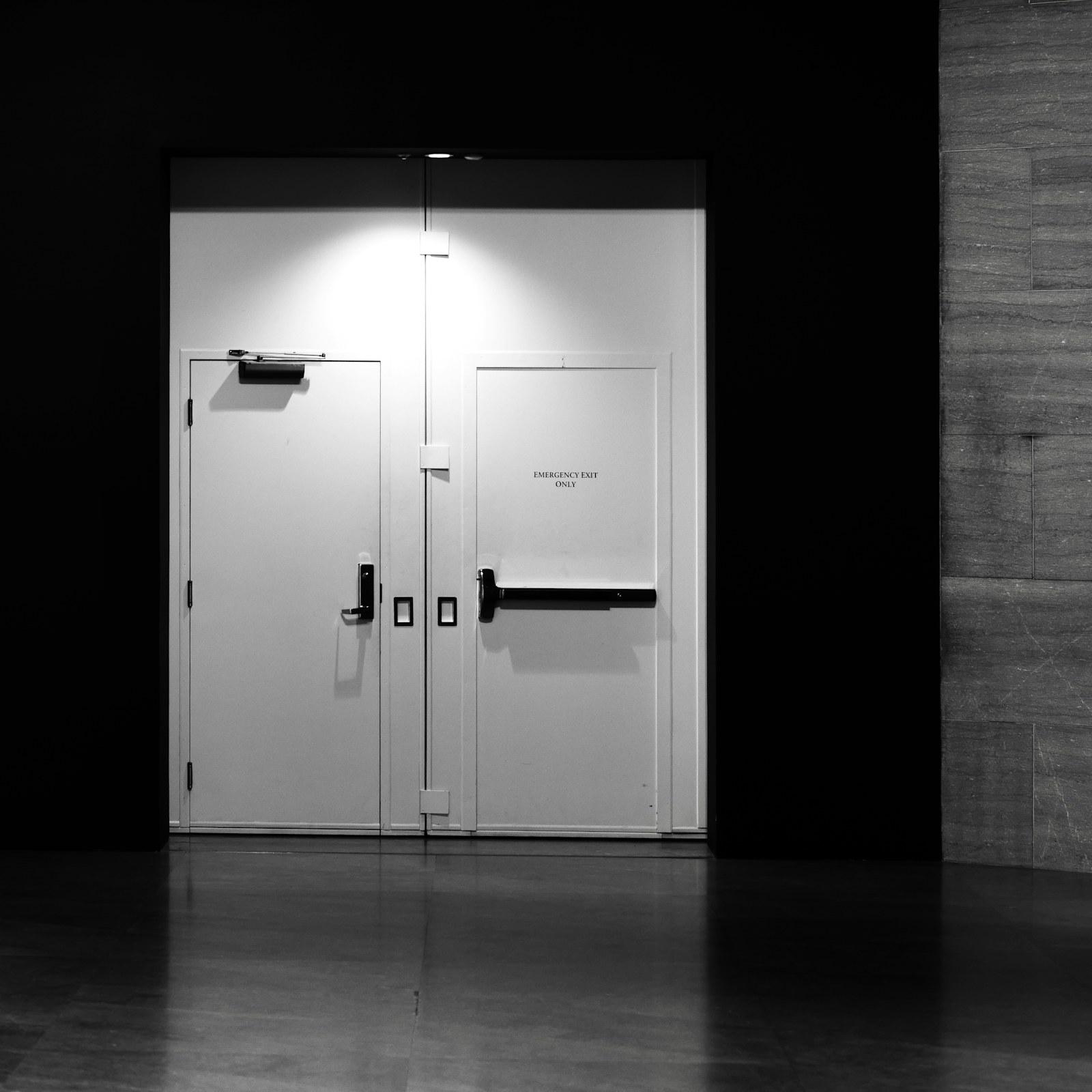
Escape. An exit door must still open from the inside, quickly and without a key, whatever its security class. On escape routes this is usually done with emergency exit devices to EN 179, for occupants who know the building, or panic exit devices to EN 1125, for public areas. The outside stays locked while the inside allows free exit. The escape hardware must be compatible with the locking used in the security test. In Jordan, the fire and escape arrangement should also be agreed with the General Directorate of Civil Defence as part of the building's approval; in other countries, with the local civil defence authority.
Checklist: what to put in a security door specification
For each opening, the specification or tender should state:
- Resistance class to EN 1627 (for example RC3), set from the risk assessment.
- Test evidence: classification report or certificate from an independent laboratory, covering the size, leaf configuration and hardware offered.
- Wall construction at the opening, meeting the wall requirements for the class.
- Frame and fixings: frame type and anchoring as tested.
- Locking: number of locking points, lock type and security cylinder with protection.
- Hinge-side protection: dog bolts or equivalent.
- Glazing, if any: size and glass class as tested.
- Other functions: fire rating, ballistic class, blast rating, acoustic or thermal performance, each with its own evidence.
- Escape requirements: EN 179 or EN 1125 hardware where the door is on an escape route, and any access control or electric locking.
- Installation and handover: installation to the tested details, inspection, certificates and maintenance instructions.
When you send this to a security doors supplier, include the door schedule and wall details. A precise brief gets comparable offers and shows which bidder is offering a tested assembly.
If you are specifying security doors for a project, see our security doors page or request a quote.